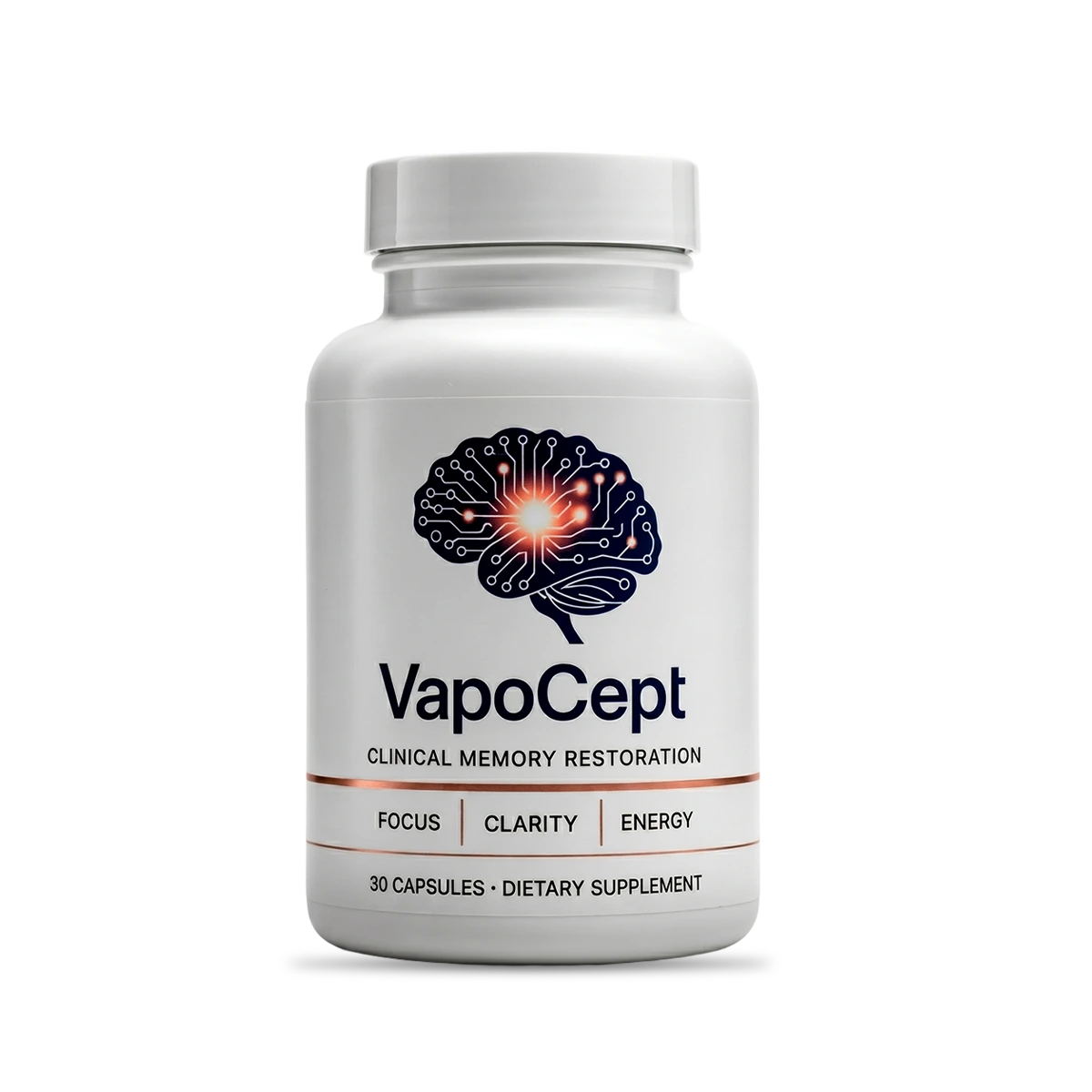
Most people never read the back of a supplement bottle, and it's hard to blame them — the panel is dense, the font is small, and half the terms sound like chemistry homework. This page translates the VapoCept® panel into plain language so you can judge it yourself.
Supplement Facts
Other ingredients: Bovine Gelatin Capsule, Magnesium Stearate, Microcrystalline Cellulose.
Why "no proprietary blend" is the line that matters
A proprietary blend lets a manufacturer list several ingredients under one combined weight. Legally it's permitted. Practically it means you cannot tell whether a formula contains a research-relevant amount of an ingredient or a sprinkle of it added so the name can appear on the front of the bottle. The industry term for the latter is "fairy dusting," and it's common.
When every active is listed on its own line, that ambiguity goes away. You can look up what amount was used in published research and compare. You can check each ingredient against your medication list. You can tell your pharmacist exactly what you're taking. None of that is possible behind a blend.
The six actives, translated
D-Glucosamine Sulfate Potassium Chloride. An amino sugar your body produces naturally. The potassium chloride is a stabiliser that keeps the glucosamine sulfate shelf-stable — it isn't a separate active ingredient. Best known from joint supplements.
Ginkgo Biloba Extract. Leaf extract standardised for flavonoid glycosides and terpene lactones. The most-researched botanical in the memory category.
Turmeric Extract. Root extract supplying curcuminoids, a well-characterised family of plant antioxidants.
Marigold Extract. The commercial source of lutein and zeaxanthin. If a label says "lutein," marigold is almost always where it came from.
Green Tea Extract. Concentrated catechins, principally EGCG, with a small amount of naturally occurring caffeine.
Bamboo Extract. The richest plant source of bioavailable silica, plus flavonoid antioxidants.
The three inactive ingredients, and why they're there
Bovine gelatin capsule. The shell. Gelatin capsules are inexpensive, stable and dissolve predictably. They are also animal-derived, which means VapoCept® is not vegetarian, not vegan, and not certified halal or kosher. This is the single most likely reason someone reading this page should not buy the product, and it belongs near the top of the discussion rather than buried at the bottom.
Magnesium stearate. A flow agent. During encapsulation, powder has to move through machinery without sticking or clumping; magnesium stearate is what makes that work. It appears in a large share of capsules and tablets on the market, at very small amounts. Internet claims that it suppresses immune function trace back to a single cell-culture study that has not translated to humans.
Microcrystalline cellulose. Purified plant fibre used as a bulking agent so every capsule has a consistent fill weight. Inert, plant-derived, and about as ordinary as an excipient gets.
What the label does not tell you
Transparency has limits, and pretending otherwise would undo the point of this page.
The panel names the extracts but a printed panel alone doesn't tell you the standardisation ratio — for example, whether a ginkgo extract is standardised to the 24% flavonoid glycoside / 6% terpene lactone specification used in most published research. It doesn't tell you the curcuminoid percentage of the turmeric extract, which affects how much of the active you're actually getting. And it doesn't tell you whether a bioavailability enhancer is present, which matters a great deal for curcumin specifically.
Exact milligram amounts per serving are printed on the physical bottle panel and shown on the official checkout page. If those details matter to you — and for turmeric and ginkgo they reasonably should — check them there before ordering, and contact the manufacturer for standardisation details.
A quick label test you can use on any product
- Is every active named with its own amount?If not, you cannot verify anything. Put it back.
- Are the inactive ingredients listed?This is where allergens, gelatin and dietary conflicts hide.
- Does any ingredient have a known interaction?Ginkgo, St John's wort and high-dose vitamin E are common culprits. Search the name plus "interactions."
- Does the amount match the research?Look up one trial on the headline ingredient and compare doses. A tenth of the studied amount is a marketing ingredient.
- Does the front of the bottle promise something the back can't support?Disease claims on a supplement are a red flag, not a selling point.