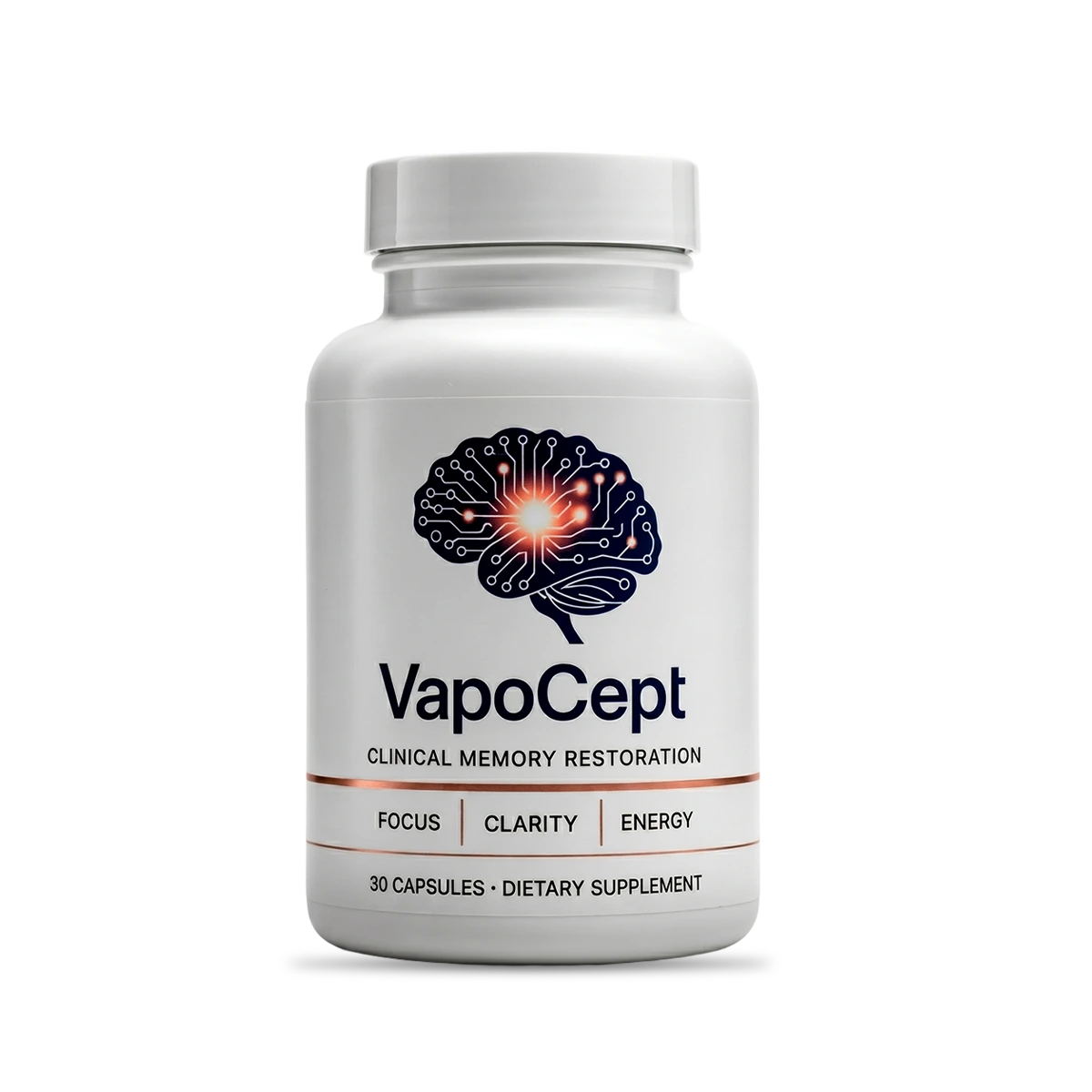
Every supplement page claims to be backed by science. Very few say what that phrase actually covers, which studies they mean, or where the evidence runs out. This page does all three.

"There is no trial on this product. There are trials on some of its ingredients. Those are different sentences, and the difference is the whole story."
The limitation that applies to the entire category
No clinical trial has been conducted on VapoCept® as a finished product. Everything described below concerns research on individual ingredients, usually studied alone, often at doses that may differ from what's in this capsule, and frequently in populations that may not match yours.
This is true of virtually every multi-ingredient supplement sold in the United States. Running a randomised controlled trial on a finished formula costs millions and takes years, and the regulatory framework for dietary supplements does not require it. Any brand implying otherwise is overstating its position — so when you see "clinically proven" on a supplement box, the honest translation is usually "contains an ingredient that has been studied."
Grading the six ingredients
| Ingredient | Human cognitive research | How to read it |
|---|---|---|
| Marigold (lutein) | Moderate and growing; consistent direction | Best mechanism-plus-evidence combination in the formula |
| Ginkgo Biloba | Extensive but conflicting | Modest short-term findings; no dementia prevention |
| Turmeric | Strong lab data, small human trials | Promising; absorption is the bottleneck |
| Green Tea Extract | Good short-term, thin long-term | Attention findings are reasonably consistent |
| Bamboo Extract | Minimal | Supporting ingredient; no cognitive claims justified |
| D-Glucosamine | Indirect and observational only | Inflammatory-marker association, not a memory finding |
Reading a supplement study without being fooled
Four questions separate a meaningful finding from a press release.
How many people were in it? A trial of twenty participants generates a hypothesis. A trial of two thousand generates evidence. Both get described as "a study shows."
How long did it run? Cognitive aging happens over decades. A six-week trial can tell you about alertness; it cannot tell you about long-term cognitive health, no matter how it's summarised.
What was actually measured? "Improved cognitive function" can mean a meaningful change on a validated memory battery, or it can mean a slightly faster score on one reaction-time subtest out of twelve. The second is far more common.
Who funded it, and was it registered in advance? Industry funding doesn't invalidate a study, but pre-registration — publicly committing to the outcome measure before collecting data — is what prevents researchers from reporting whichever of twelve measures happened to look good.
Things with better evidence than any supplement
If the goal is cognitive health rather than a purchase, the honest ranking puts several unglamorous interventions above every capsule on the market.
- Blood pressure control in midlifeOne of the most consistently supported modifiable factors in the entire cognitive-aging literature.
- Regular aerobic exerciseAssociated with measurable differences in brain structure and function, not just self-reported wellbeing.
- Treating hearing lossUntreated hearing loss is a well-documented risk factor, and hearing aids are an underused intervention.
- Consistent, sufficient sleepMemory consolidation happens during sleep. Chronic short sleep undermines it directly.
- Social and mental engagementSustained, effortful cognitive activity — learning something genuinely new — holds up better in research than passive puzzle apps.
- Not smoking, and moderate alcohol use at mostBoth act on the vascular system that supplies the brain.
A botanical supplement sits alongside that list, not at the top of it. Anyone selling a capsule as a shortcut past those six items is selling something that doesn't exist.
So what would make VapoCept® a reasonable choice?
If the fundamentals above are broadly in place, if you want a single daily capsule rather than five separate bottles, if you value a label that names everything, and if you're willing to give it two to three months rather than two weeks — then it's a defensible purchase, protected by a 60-day guarantee.
If you're hoping it will replace exercise, fix a problem your doctor hasn't evaluated, or produce a noticeable change this week, it won't, and no amount of ingredient chemistry changes that.
References to published research describe studies on individual ingredients, not on the finished VapoCept® product. These statements have not been evaluated by the Food and Drug Administration. VapoCept® is not intended to diagnose, treat, cure or prevent any disease.
See Pricing & Packages