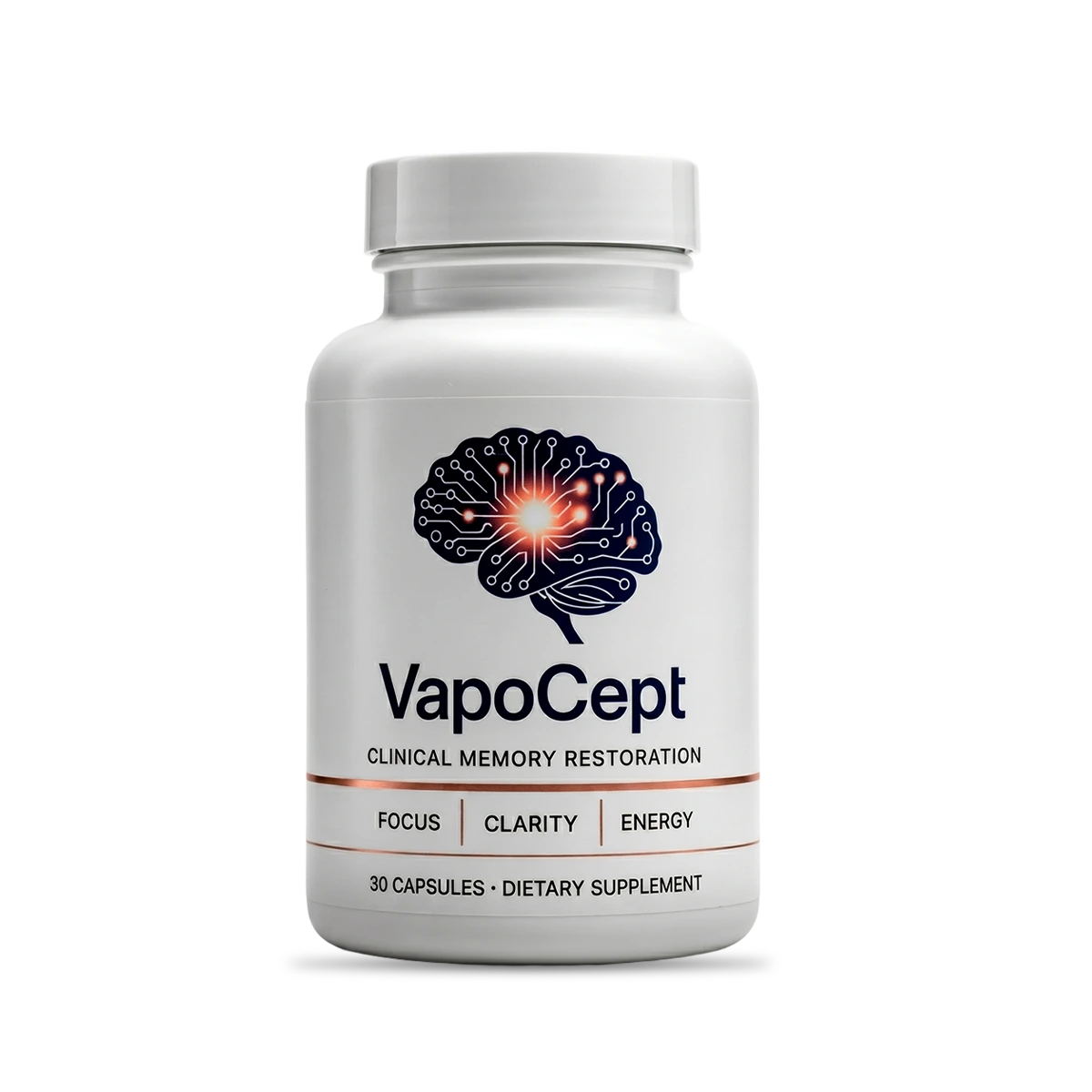
Summary: a transparent six-ingredient label, an evidence base that is genuinely strong for two ingredients and genuinely thin for two others, and one interaction — ginkgo with blood-thinning medication — that deserves a real conversation before anyone starts.

"I don't think supplements are magic and I don't think they're worthless. I think most of them are simply unreadable, and that's a solvable problem."
How I read a supplement label
When a patient hands me a bottle, I do the same four things in the same order, and none of them involve the marketing on the front.
First I look for named ingredients with stated doses. A label that says "Proprietary Cognitive Matrix 750 mg" tells me nothing useful. I can't check it against a drug list, I can't compare it to a published trial, and I can't tell whether the active ingredient is present at a meaningful amount or a token one. Second, I look at the inactive ingredients — they tell you about the capsule, the allergens and whether the product suits someone's diet. Third, I check for anything with a known interaction profile. Fourth, and only then, I read the claims.
VapoCept® passes the first test more cleanly than most products in this category. Six actives, each named individually: D-Glucosamine Sulfate Potassium Chloride, Ginkgo Biloba Extract, Turmeric Extract, Marigold Extract, Green Tea Extract and Bamboo Extract. Three inactives, also named: bovine gelatin capsule, magnesium stearate, microcrystalline cellulose. That's a label a person can take to an appointment and have an actual conversation about.
The interaction I would flag first
Ginkgo Biloba can affect platelet function and bleeding time. In practice, that means anyone on warfarin, clopidogrel, apixaban, daily aspirin or a similar medication should speak with their prescribing physician before starting a ginkgo-containing product. It also means ginkgo is typically discontinued a couple of weeks before scheduled surgery or dental extraction.
This is not a reason to avoid ginkgo. It's a reason to mention it. Most interactions in medicine are manageable when they're known and dangerous when they're a surprise.
Two smaller points belong in the same paragraph. Turmeric stimulates bile flow, which is worth knowing if you have gallstones or gallbladder disease. And glucosamine is sometimes manufactured from shellfish; anyone with a shellfish allergy should confirm the source with the manufacturer before ordering rather than assuming.
Where the evidence is real
Two ingredients here are doing most of the scientific work.
Lutein, supplied by marigold extract, has the most coherent story. It accumulates in neural tissue rather than simply passing through, and measurements of lutein status in older adults track consistently with performance on memory and processing-speed tasks. The safety profile is excellent. If I were designing a cognitive formula from scratch, lutein would be on the shortlist.
Ginkgo Biloba has the most data and the most argument. Shorter trials in healthy older adults have reported modest improvements in attention and recall. The large multi-year Ginkgo Evaluation of Memory study found it did not prevent dementia. Both of those findings are real, and a site that quotes only the first one is not being straight with you.
Where the evidence is thin
I'd put bamboo extract and D-glucosamine in a different category. Bamboo supplies bioavailable silica and some flavonoid antioxidants; the direct human research on cognition is close to nonexistent. Glucosamine's case rests on large observational datasets linking habitual use with lower inflammatory markers and better cardiovascular outcomes — an indirect argument, and observational data cannot establish cause.
Turmeric and green tea extract sit in between: strong mechanistic and antioxidant data, smaller and shorter human cognitive trials. Encouraging rather than settled.
What a supplement like this can and cannot be
A daily botanical capsule is a reasonable addition to a broader approach. It is not a substitute for one. If a patient asked me to rank the things that support cognitive health as we age, the supplement would not be first. Managing blood pressure would be first. Then sleep, then regular aerobic exercise, then hearing correction if it's needed, then staying socially and mentally engaged. Every one of those has stronger evidence than any capsule on the market.
What I'd say is: if those things are in reasonable order and you want to add a well-labelled botanical formula on top, that's a defensible choice. If you're hoping a capsule will substitute for the list above, it won't, and no honest reviewer should suggest otherwise.
When to stop shopping and call a doctor
There is a category of memory change that does not belong on a supplement website at all. Get an appointment rather than a bottle if you notice: memory problems that are getting noticeably worse month over month; difficulty with familiar tasks like paying bills or following a recipe you've used for years; getting lost in familiar places; word-finding problems that interrupt conversation regularly; or personality and judgement changes that family members notice before you do.
Several causes of memory change are treatable — thyroid disease, B12 deficiency, sleep apnoea, depression, medication side effects. All of them are missed if the first response is to buy a supplement and wait three months.
This review is educational and reflects general clinical reasoning about a product category. It is not a diagnosis, a prescription, or personal medical advice, and it does not establish a physician–patient relationship. Consult your own healthcare provider before starting any supplement.
See Pricing & Packages